
Define what the budget must accomplish
The price of a reader does not describe the cost of a controlled entrance. A commercial access control project can include locking hardware, a controller, power arrangements, cabling, software, credentials, installation, and training. The existing door and the way people use it influence the work as much as the number of openings.
Start the budget with an operational objective: manage employee entry, separate a restricted area, simplify credential changes, or administer several sites. List the doors involved and the people who need access. A shared scope makes later price comparisons more meaningful.
Ask for a price tied to an actual scope
Published integrator guides can help identify what an installed proposal should include, but another company's price is not a HITEK quote. Market, hardware, project conditions, and included services vary. Safe and Sound Security and Action 1st both discuss the difference between initial installation and continuing software or service costs in their own guides.
HITEK's quoting process starts with the property and the work required. Use the quote store to select the relevant system scope, then share the door details and operating requirements. A written proposal provides the actual price after the scope is reviewed. A general online figure should not replace that review or imply a commitment about a particular building.
Inventory the openings before counting readers
Photograph both sides of each proposed opening, its frame, lock, closer, exit hardware, and any existing electrical components. Note doors that fail to close or latch correctly. Identify exterior exposure, visitor use, delivery traffic, and any work that requires landlord approval.
Ask the responsible professional to evaluate the whole opening, including applicable exit, accessibility, and fire-rating requirements. An electric strike is one possible locking component; Allegion explains that it works with the mechanical latch to permit authorized opening. That description does not establish that a strike is suitable for every door. The actual design must address the opening's requirements and existing conditions.
Separate the installation and operating costs
Ask for one-time and recurring costs in distinct sections. The first may include equipment, cable routes, installation, configuration, credential enrollment, testing, and training. The second may include software subscriptions, support, maintenance, connectivity, or selected integrations. Avoid assuming that either cloud or on-premises systems have a universal cost advantage.
Choose a comparison period that suits your planning process, such as five years, and list the known charges over that period. Mark estimates and uncertain future prices plainly. Include the responsibilities your own staff will carry: managing users, maintaining supporting computers or networks, and coordinating updates. A lower invoice may shift work to your team rather than eliminate it.
Identify the work outside the equipment list
Cable pathways, wall construction, door repairs, available power, and network readiness can change installation effort. An occupied facility may also require escorts, limited work hours, lifts, or phased access. Ask which building works and project approvals are included and which belong to another contractor or the property owner.
If the design interacts with a fire alarm, intercom, elevator, gate, or video platform, document the expected behavior. Require the relevant parties to confirm compatibility and responsibility. A proposal should not use the word integration without explaining what is being connected and what the customer will be able to do.
Price the administration and the next phase
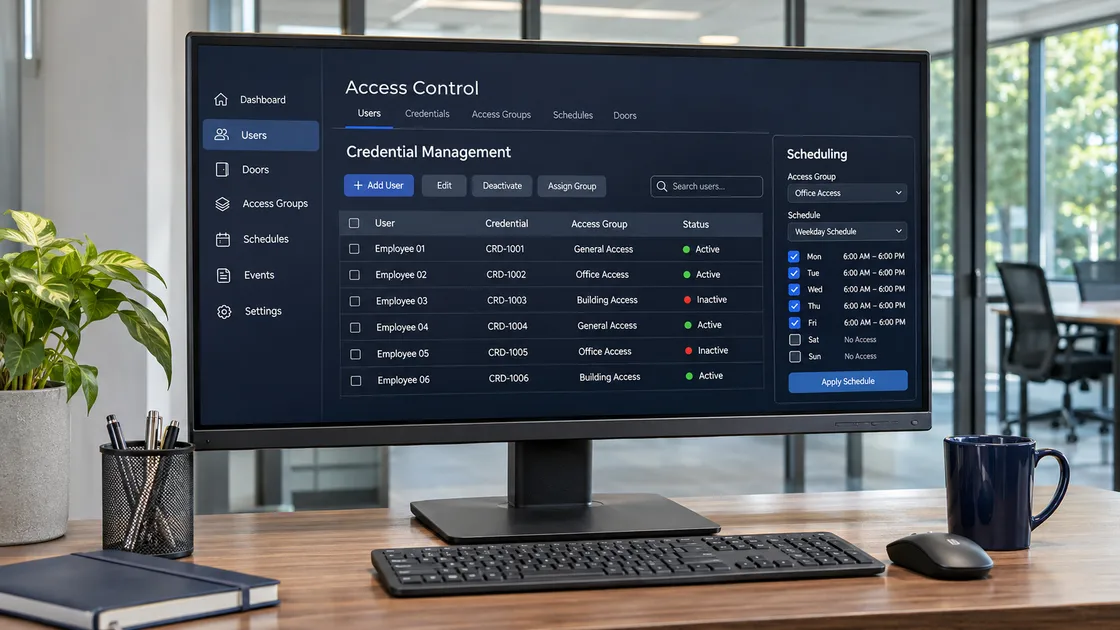
Decide who issues credentials, changes schedules, reviews access events, and removes access when a person leaves. Ask the provider to demonstrate those routine tasks. Confirm the number and type of credentials included and whether selected administrative features require additional licensing.
For a phased project, write down the intended next openings or locations. Ask what future expansion would require in controllers, licenses, cabling, and labor. A claim that a system is expandable is less useful than an explanation of how the next phase would be implemented.
Request a proposal that can be reviewed line by line
Provide each bidder with the same door list and operating objectives. Request equipment and work descriptions, recurring charges, exclusions, acceptance steps, training, support, warranty terms, and payment milestones. Resolve questions in writing before authorizing work. Do not compare a hardware-only shopping cart with a complete installed project as though they were the same purchase.
Use HITEK's quote tools to organize the first request: identify the property, select a door-access starting scope, and describe the users and current hardware. A budget discussion helps determine the appropriate next step; a formal proposal establishes the approved scope and price. Preferred consultation dates remain requests until the team confirms availability.
Ownership, licensing and support questions
Confirm who owns the administrator accounts and access-event records, who manages backups where applicable, and which functions depend on an active license or support agreement. Ask what happens at renewal and what options exist if the business changes provider.
Review each opening with the responsible project team. Network-outage behavior, backup power and any required fire-alarm interface depend on the selected equipment and the actual door design. Document the expected behavior and how it will be demonstrated.
Further reading
Safe and Sound Security: Access Control Systems Cost, published integrator guideAction 1st: Commercial Access Control Cost in Orange County, published integrator guideAllegion: What is an electric strike?ButterflyMX: Access control systems and project cost factorsTurn a useful guide into a practical plan.
Bring your questions to HITEK. Start with a quote package or request a consultation for your building.
Talk through your project