
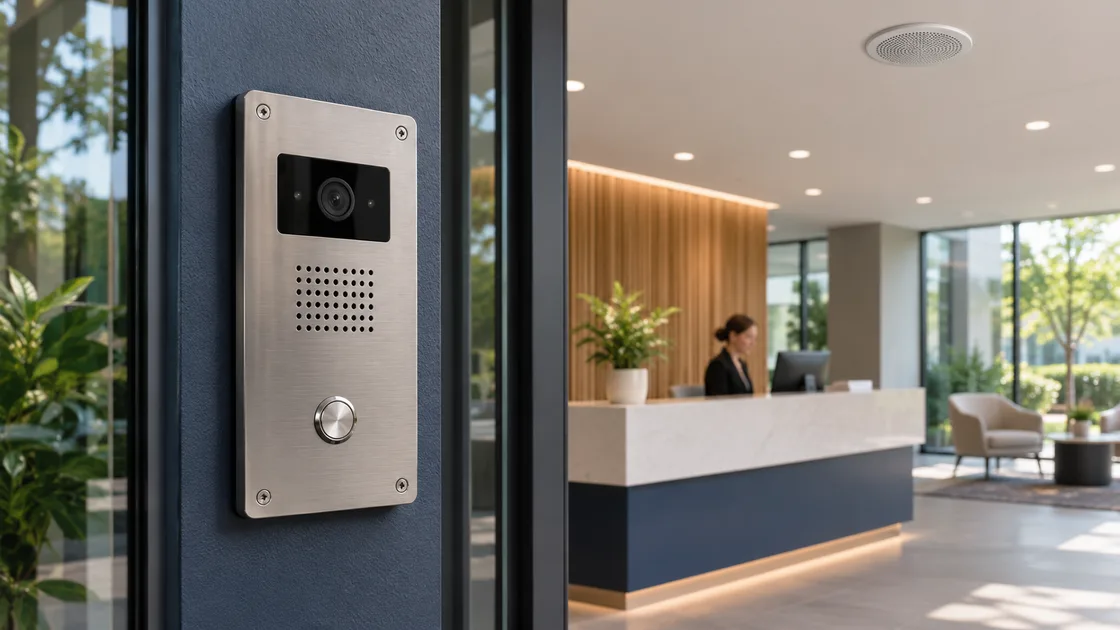
Start with communication tasks
A building communication system should begin with a clear description of who needs to reach whom. A visitor at an entrance, a receptionist calling a staff member, and an announcement across a warehouse are different communication tasks. Defining those tasks first makes the equipment discussion more useful.
Map the communication routes
List the entrances, reception points, offices, work areas, and outdoor spaces involved. For each location, identify whether people need two-way conversation, a one-way announcement, or both. Note who is responsible for answering and what should happen when that person is away.
For an entrance intercom, explain the complete visitor process. Where does the visitor wait? Who verifies the purpose of the visit? If door release is proposed, have the access-control and door-hardware requirements reviewed as part of the project. A call button alone does not define the entry procedure.
Define the paging zones
Different areas may need different messages. A loading dock announcement may not belong in a quiet office, while a building-wide message may need broader coverage. Write down the intended zones and who is permitted to page each one.
TOA's industry planning discussion illustrates the relationship between paging zones, message priorities, and intelligibility. The principles are useful prompts for a consultation, but a design must reflect the actual building rather than borrowing another facility's settings.
Review the listening environment
Walk the areas while they are in normal use. Machinery, ventilation, hard surfaces, open doors, and activity patterns can affect how announcements are heard. Describe the busiest and quietest conditions to the provider. Ask how speaker locations and system settings will be assessed for the intended spaces.
Louder sound is not the only design question. The goal is for the intended listeners to understand the message under the conditions the project is meant to address. Agree on how the system will be demonstrated and accepted after installation.
Coordinate interfaces and responsibilities
If the project is expected to connect with access control, existing audio, a network, or a life-safety system, document the desired behavior. Ask for compatibility checks and clear responsibility for each interface. An ordinary paging system should not be represented as an approved emergency-notification solution without the appropriate design and approvals.
Also establish who manages user permissions, equipment settings, and future changes. Make sure the people who operate the system receive training suited to their tasks rather than only a technical manual.
Prepare the first request
Bring a floor plan, the approximate number of call stations or paging areas, existing equipment details, and a few examples of everyday announcements. Explain any planned expansion or construction schedule.
HITEK can use these details to begin an intercom/PA project discussion. The next step is a site-specific scope that defines locations, functions, installation responsibilities, training, and support expectations before a final proposal is approved.
Further reading
industry planning discussionTurn a useful guide into a practical plan.
Bring your questions to HITEK. Start with a quote package or request a consultation for your building.
Talk through your project